Discover easy yoga poses for flexibility that bring gentle movement and a quiet pause into your day.
You do not need to touch your toes or complete difficult balances to begin. A comfortable chair, clear space and willingness to move slowly provide a useful starting point.
This tutorial introduces adaptable poses for adults, including seniors. Younger family members can join with appropriate supervision and guidance.
Choose movements according to your ability, rather than your age alone. Everyone can use support, shorten a session or skip an uncomfortable position.
What Makes Yoga Gentle?
Gentle yoga usually involves slower movements, comfortable positions and time to settle between poses. The emphasis is on control and awareness.
Yoga may support balance, stress management and general wellbeing. However, benefits vary, and a short routine cannot guarantee specific results.
Think of your practice as time to explore movement. You can enjoy a session without reaching further or holding longer.
These easy yoga poses for flexibility offer options you can adapt. A qualified instructor can help personalise them further.
Prepare Your Practice Space
Choose a solid chair without wheels, positioned on a surface where it will not slide. Your feet should rest comfortably.
Clear nearby obstacles and wear clothing that allows movement. Keep a wall or stable support nearby for standing poses.
If practising on the floor, use a suitable yoga mat. A Yoga Foam Mat offers cushioning for floor-based movements.
Floor poses are optional. You can complete this routine seated if getting down or standing up feels difficult.
Older adults, pregnant people and anyone with health conditions may need individual modifications. Discuss your needs with a healthcare professional and instructor.
Five Easy Yoga Poses for Flexibility
Seated Mountain Pose
Sit upright with both feet resting on the floor. Let your hands rest on your thighs.
Lengthen gently through your upper body without stiffening your back. Relax your shoulders and keep your chin level.
Breathe normally for three to five breaths. Notice the support beneath you and the contact through your feet.
Standing option: Stand near a wall with your feet comfortably apart. Keep a soft bend in your knees.
Use support whenever needed. There is no requirement to close your eyes or practise without assistance.
Gentle Chair Cat–Cow
Remain seated with your hands on your thighs. Begin with a small movement through your upper body.
As you inhale, gently lift your chest and draw your shoulders slightly backwards. Avoid forcing an arch through your lower back.
As you exhale, soften your chest and allow a small rounding movement. Keep your neck comfortable throughout.
Repeat three to five times at an unhurried pace. Reduce the movement if your back feels uncomfortable.
If you have osteoporosis or spinal restrictions, seek guidance before using rounding or arching movements.
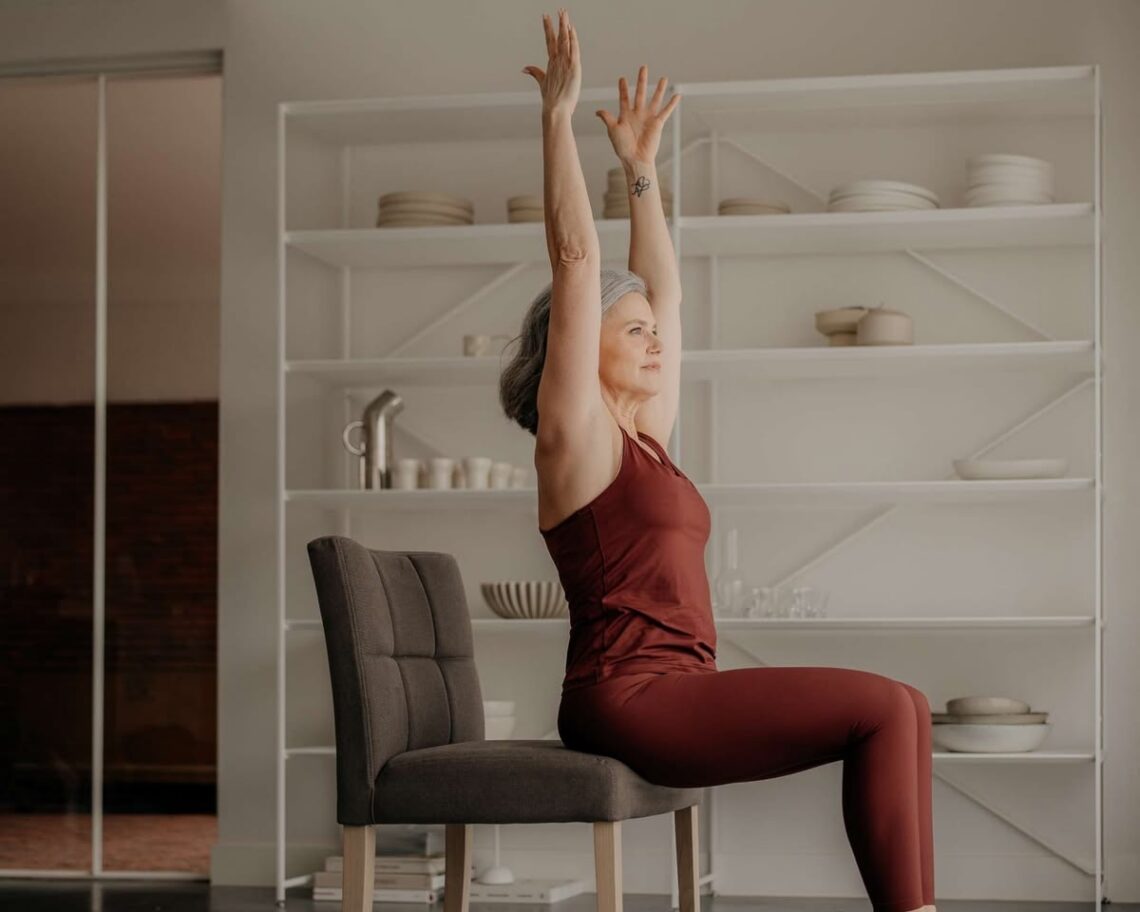
Seated Arm Reach
Sit evenly through your hips with your feet grounded. Slowly raise your arms only as high as feels comfortable.
Your hands can remain below shoulder height. Keep your shoulders relaxed rather than forcing them towards your ears.
Pause for one or two comfortable breaths, then lower your arms. Repeat two or three times.
Alternative: Move one arm at a time. Keep the other hand resting on your thigh.
Skip overhead reaching if it causes discomfort. A smaller movement still gives you an opportunity to practise control.
Supported Side Stretch
Sit upright and rest one hand beside your hip. Place your other hand on your shoulder or raise it comfortably.
Gently lean a small distance sideways without lifting either hip. Keep your chest facing forwards.
Take one or two normal breaths, then return slowly. Repeat on the other side.
Avoid pulling yourself deeper with your supporting hand. You should feel comfortable rather than compressed or strained.
If leaning feels unsuitable, remain upright and practise the arm movement alone.
Seated Rest
Sit comfortably with your back supported if preferred. Let your hands rest in your lap.
Keep your eyes open or softly focused. Allow your breathing to follow its natural rhythm.
Notice whether your shoulders, jaw or hands can soften. There is no need to force deep breaths.
Rest for one or two minutes before finishing. Stand slowly if you choose to get up.
This final pause gives your session a calm ending.
Build a Short Daily Routine
Practise easy yoga poses for beginners in a sequence that suits your energy and available time.
Begin with seated posture and relaxed breathing. Continue through the comfortable movements, then finish with seated rest.
Allow around ten minutes initially. Shorten the session whenever needed, and pause between poses.
Before stretching, spend a minute gently marching seated or moving your shoulders. Stay within a comfortable movement range.
Keep Your Practice Comfortable
Stop if you experience pain, dizziness or unusual breathlessness. Avoid forcing stretches or holding your breath.
Let easy yoga poses for flexibility become a flexible habit, rather than another daily pressure.
Choose a familiar time, use support freely and move at your own pace. Comfort and consistency matter more than perfect-looking poses.
Interested in some extra reading on the best non slip yoga mats? click here