A resistance band workout is a simple and versatile way to build strength, improve mobility and train your entire body at home or in the gym. Unlike traditional weights, resistance bands are lightweight, portable and available in different resistance levels.
Moreover, you can use them for everything from arm band workouts and lower-body exercises to full-body strength sessions. Therefore, they are particularly useful if you want effective training equipment without taking up much space.
- What Is a Resistance Band Workout?
- Best Full-Body Resistance Band Workout
- Best Resistance Band Arm Workouts
- Stretch Band Exercises for Mobility
- What Are Tension Band Workouts?
- How Much Resistance Should You Use?
- Can Resistance Bands Build Muscle?
- Resistance Bands vs Weights
- Sample 20-Minute Resistance Band Workout
- Final Thoughts
- Frequently Asked Questions
What Is a Resistance Band Workout?
A resistance band workout uses an elastic band to create resistance as you move. The band becomes more challenging to stretch, which means your muscles have to work throughout the movement.
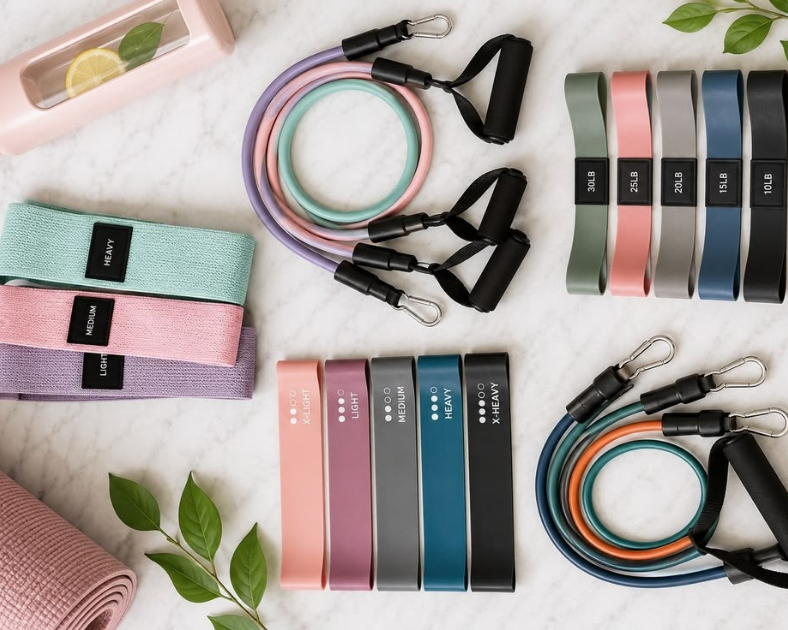
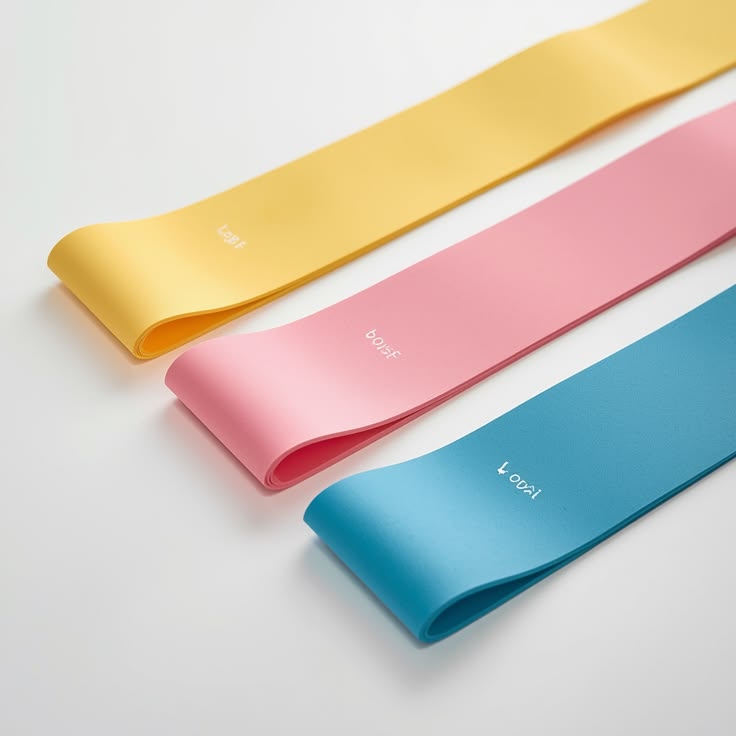
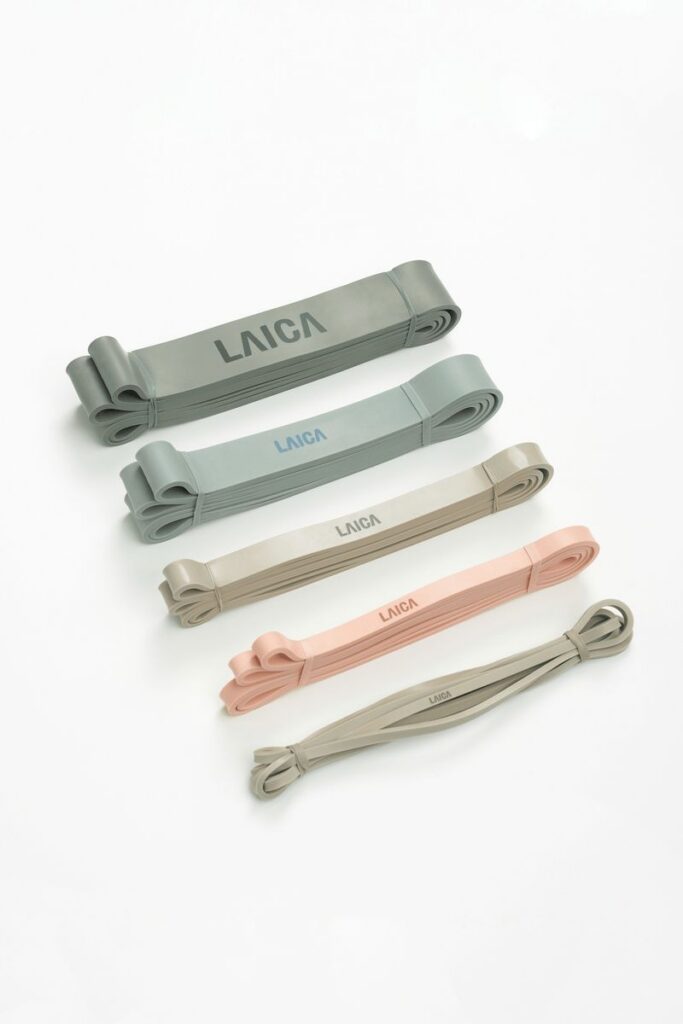
There are several types of resistance bands, including:
- Loop bands
- Long resistance bands
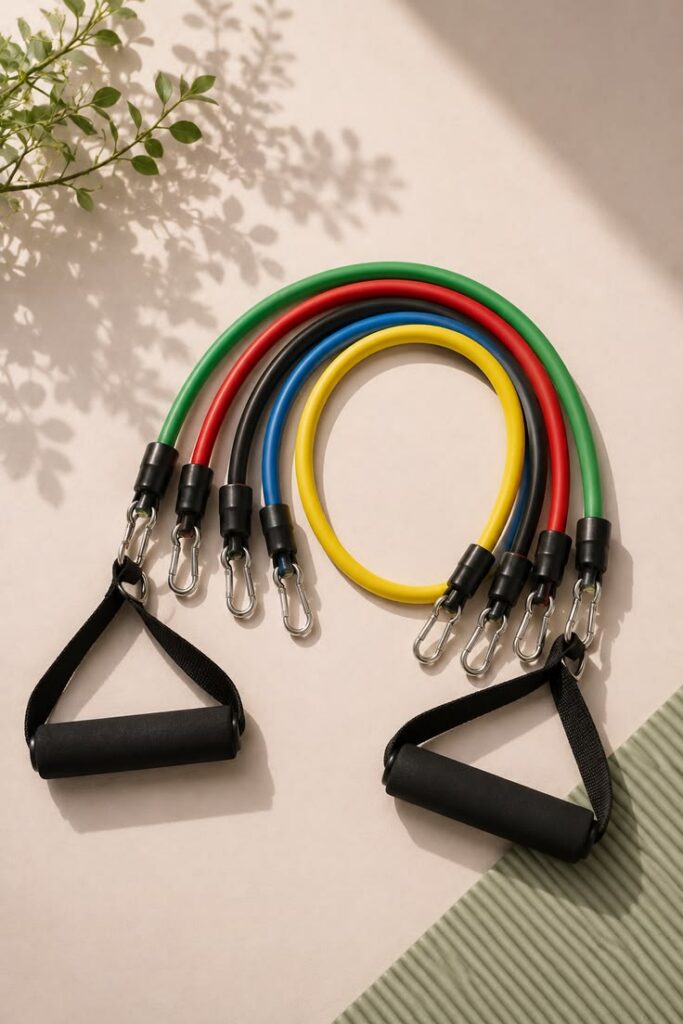
- Tube bands with handles
- Fabric bands
- Therapy or stretch bands
Consequently, you can choose the style that best suits your training goals and experience level.
Best Full-Body Resistance Band Workout
A full body resistance band workout can target your legs, glutes, back, chest, shoulders and arms in one session.
Try these exercises:
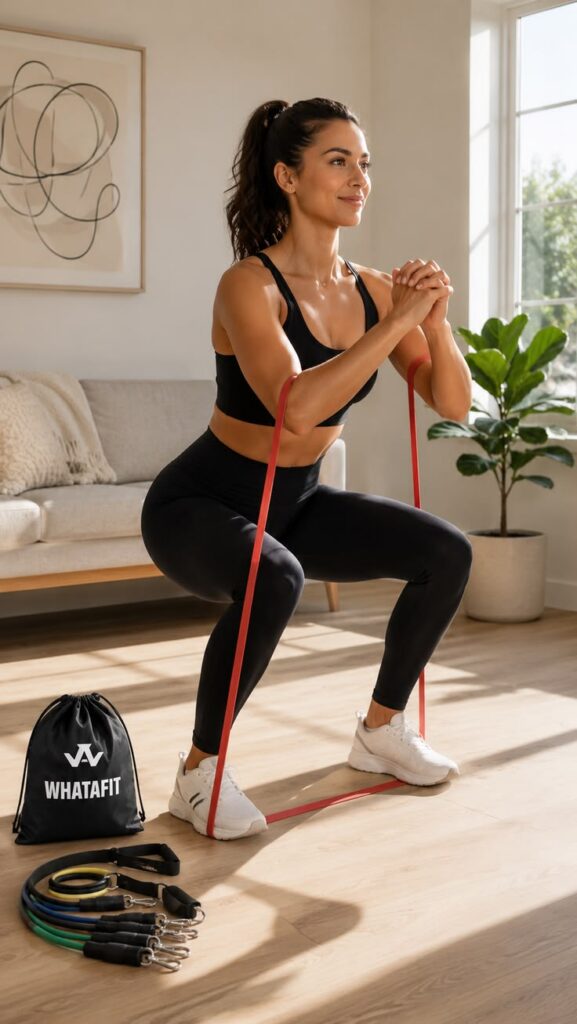
1. Resistance Band Squats
Stand on the band and hold the handles or ends near your shoulders. Lower into a controlled squat and drive through your feet to return to standing.
Targets: Quads, glutes and hamstrings.
2. Resistance Band Rows
Anchor the band securely or wrap it around a stable point. Pull the handles towards your body while keeping your back controlled.
Targets: Upper back, shoulders and biceps.
3. Resistance Band Chest Press
Anchor the band behind you at approximately chest height. Press your hands forward and slowly return.
Targets: Chest, shoulders and triceps.
4. Resistance Band Romanian Deadlift
Stand on the band while holding the ends. Push your hips backwards while maintaining a controlled spine, then drive your hips forward.
Targets: Hamstrings, glutes and lower back.
5. Resistance Band Shoulder Press
Stand on the middle of the band and press the handles upwards. Lower them slowly before repeating.
Targets: Shoulders and triceps.
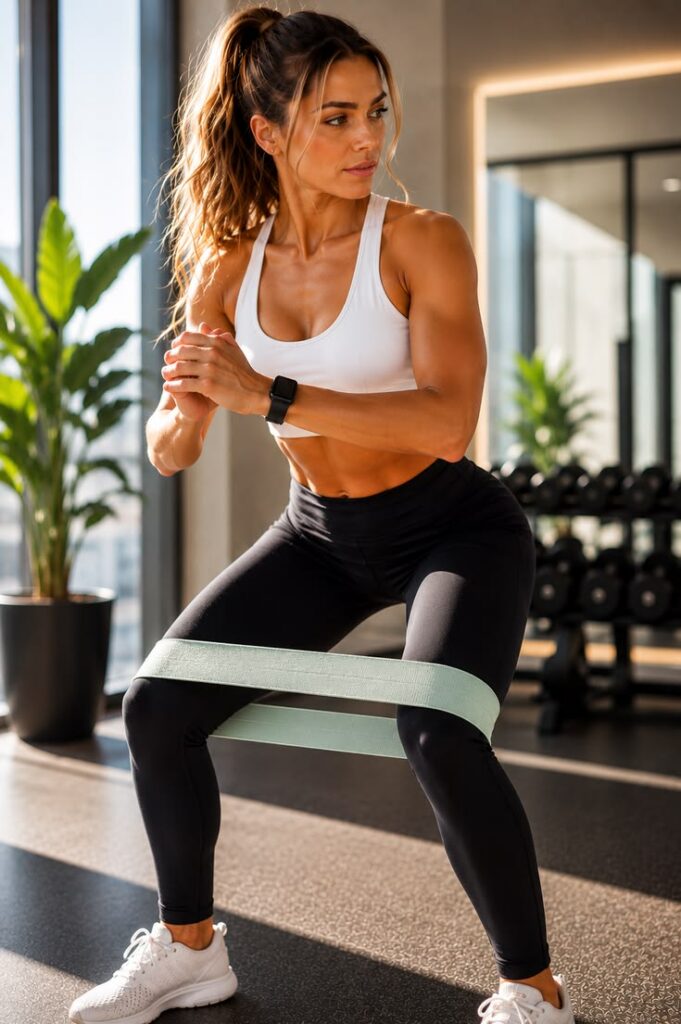
6. Resistance Band Glute Bridges
Place a loop band above your knees and lie on your back. Drive your hips upwards while keeping tension through the band.
Targets: Glutes and hamstrings.
Best Resistance Band Arm Workouts
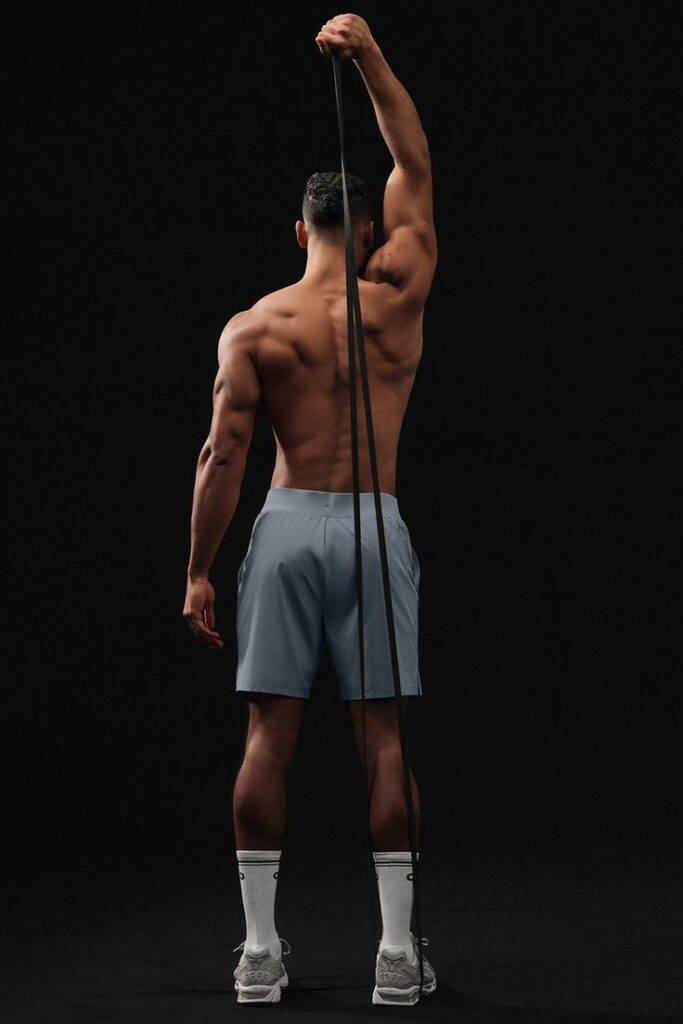
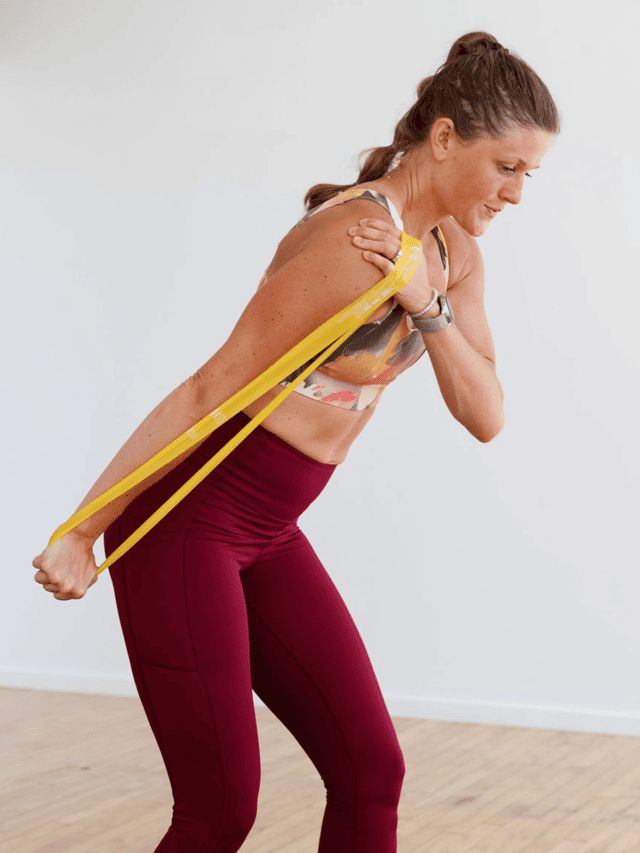
Resistance bands are particularly effective for isolated arm exercises because you can control the resistance throughout the movement.
Banded Biceps Curls
Stand on the centre of the band and curl the handles towards your shoulders. Keep your elbows close to your sides.
Banded Triceps Extensions
Anchor the band overhead or use a suitable setup. Extend your arms while keeping your elbows controlled.
Banded Hammer Curls
Hold the handles with a neutral grip and curl upwards without swinging your body.
Banded Triceps Pressdowns
Attach a resistance band to a secure high anchor. Press the band down until your arms are extended.
These arm band workouts can be combined into a short upper-body circuit.

Stretch Band Exercises for Mobility
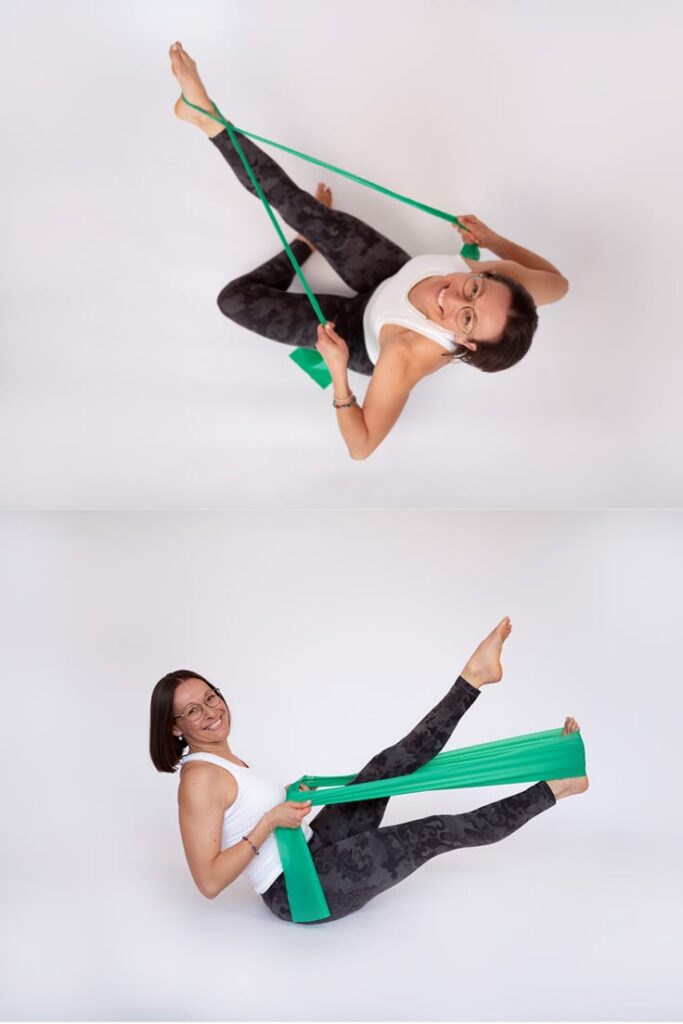
Resistance bands are not only for strength training. Stretch band exercises can also help introduce controlled resistance and support mobility work.
Useful movements include:
- Shoulder pull-aparts
- Banded shoulder rotations
- Hamstring stretches
- Hip-opening movements
- Ankle mobility exercises
However, keep the resistance light during mobility exercises. The goal should be controlled movement rather than maximum tension.
What Are Tension Band Workouts?
Tension band workouts use the resistance created as the elastic band stretches. Unlike free weights, resistance changes throughout the range of motion.
For example, a banded biceps curl becomes progressively more challenging as the band stretches further. This can make bands useful for both strength and conditioning workouts.
To increase the challenge, you can:
- Use a stronger band
- Increase repetitions
- Slow the lowering phase
- Add sets
- Reduce rest periods
- Increase the band’s stretch where appropriate
Therefore, you can progressively overload your muscles without necessarily adding traditional weights.
How Much Resistance Should You Use?
The right resistance should make the final repetitions challenging while allowing you to maintain good technique.
A simple approach is:
Beginner: Light resistance and controlled repetitions
Intermediate: Moderate resistance with increased volume
Advanced: Higher resistance, stronger bands or more demanding variations
Do not choose a band simply because it has the highest resistance. Instead, select one that allows you to complete the exercise with proper control.
Can Resistance Bands Build Muscle?
Yes. Resistance bands can contribute to muscle growth when exercises provide sufficient resistance and you progressively increase the training challenge.
However, muscle development also depends on your overall training programme, nutrition, sleep and recovery.
For example, you can progress from a light band to a heavier band or make an exercise more difficult as your strength improves.
Resistance Bands vs Weights
| Feature | Resistance Bands | Free Weights |
| Portability | Excellent | Limited |
| Storage | Very easy | Requires more space |
| Resistance | Variable | Consistent load |
| Home use | Excellent | Good |
| Exercise variety | High | High |
| Beginner-friendly | Yes | Yes |
Therefore, bands can be an excellent addition to a home gym, while weights may be preferable for people focused on heavier progressive strength training.
Sample 20-Minute Resistance Band Workout
For a quick full-body session, complete 3 rounds:
- 12 banded squats
- 12 banded rows
- 10 chest presses
- 12 Romanian deadlifts
- 10 shoulder presses
- 15 glute bridges
- 30 seconds rest
Keep the movements controlled and adjust the resistance according to your fitness level.
Final Thoughts
A resistance band workout can provide an effective and flexible way to train at home, outdoors or in the gym. From full body resistance band workouts to targeted arm sessions and mobility-focused stretch band exercises, there are plenty of ways to use this compact equipment.
Ultimately, choose the right resistance, focus on controlled technique and gradually increase the challenge. With consistent training, resistance bands can become a valuable part of a well-rounded fitness routine.
Frequently Asked Questions
Are resistance bands good for beginners?
Yes. Resistance bands are lightweight, easy to store and available in different resistance levels, making them suitable for beginners.
Can I do a resistance band workout every day?
You can use bands frequently, particularly for mobility or light training. However, muscles need adequate recovery after challenging strength sessions.
What are the best resistance band exercises for arms?
Biceps curls, hammer curls, triceps extensions and triceps pressdowns are effective options for arm band workouts.
Are resistance bands good for a full-body workout?
Yes. A single set of bands can be used for squats, rows, presses, deadlifts, glute exercises and arm movements.
Explore more on Resistance Band uses