A Lower back machine Gym can provide a controlled way to strengthen the muscles around your lower back while adding resistance to your workout. However, you do not need to rely on just one machine. By combining back extensions, cable movements and compound exercises, you can build a more balanced posterior chain.
Whether you are new to strength training or looking to improve your back day, these lower back exercises machine options can help you understand which equipment to use and how to train effectively.
Important: If you have persistent or worsening lower back pain, speak with a qualified healthcare professional before starting a new resistance-training programme. NHS guidance recommends staying active but advises stopping exercises if symptoms become worse.
- What Gym Machines Train the Lower Back?
- 5 Lower Back Exercises Using Gym Machines
- What Is the Best Machine for Lower Back Training?
- What Are the Big 3 Exercises for the Lower Back?
- Are 3 Exercises Enough for Back Day?
- What Gym Machine Exercises Are Good for Lower Back Pain?
- How to Train Your Lower Back Safely
- Final Thoughts
What Gym Machines Train the Lower Back?
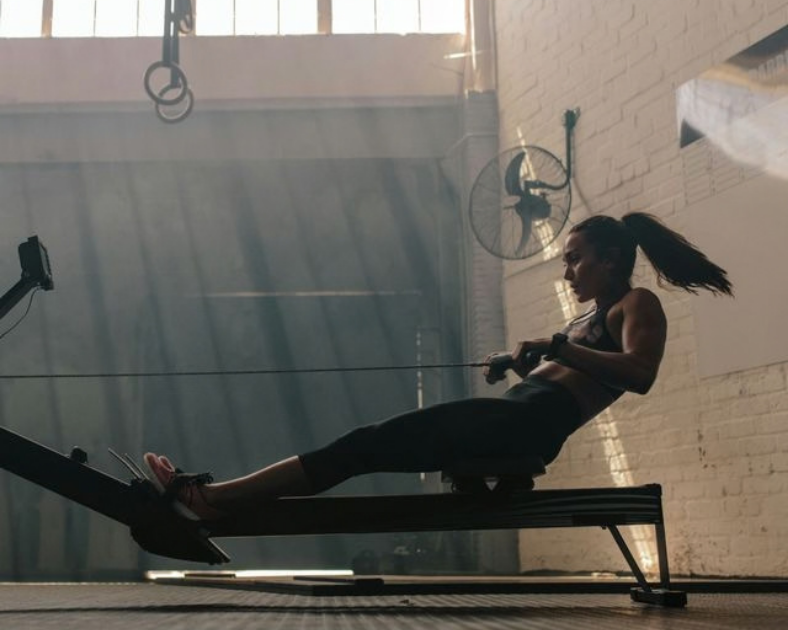
Several machines can involve the lower back, either directly or as part of a larger movement. The most obvious is a back-extension or lumbar-extension machine. However, cable machines, rowing machines and certain compound machines can also require the lower back to stabilise the body.
The key is to distinguish between direct lower-back training and exercises where the lower back works mainly as a stabiliser.
5 Lower Back Exercises Using Gym Machines
1. Machine Back Extensions
The machine back extension is one of the most direct ways to train the lower back. It primarily targets the spinal erectors while also involving the glutes and hamstrings.
How to perform it:
- Adjust the machine so your hips are positioned correctly against the pad.
- Keep your spine neutral and brace your core.
- Lower your torso under control.
- Extend back to the starting position without aggressively overextending.
- Pause briefly and repeat.
Start with a light resistance and focus on controlled movement rather than trying to lift as much weight as possible.
Best for: Direct lower-back and posterior-chain training.
2. Cable Pull-through
A cable machine can provide an excellent lower-body and posterior-chain exercise through the cable pull-through. Although the glutes and hamstrings do much of the work, the lower back helps maintain a stable torso.
Stand facing away from the cable stack, hold the rope between your legs and hinge at the hips. Drive your hips forward to return to the standing position.
Best for: Posterior-chain strength and learning the hip-hinge movement.
3. Cable Deadlift
A cable deadlift provides another way to practise a hip-hinge movement without using a barbell. Depending on the setup, the exercise can work the glutes, hamstrings, spinal erectors and other supporting muscles.
Keep the weight manageable and concentrate on pushing through the floor while maintaining a controlled spine position.
Best for: Full posterior-chain training.
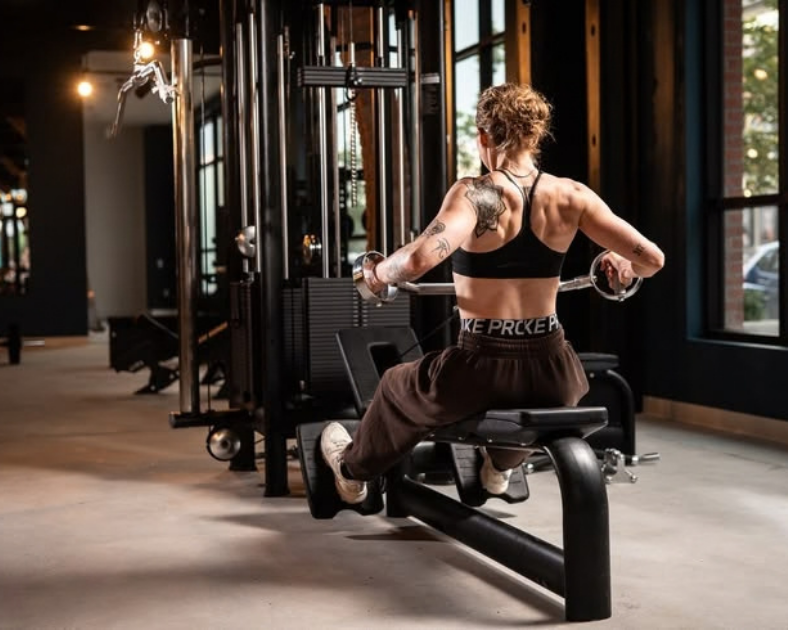
4. Seated Cable Row
A seated cable row is primarily an upper-back exercise, but your lower back also works isometrically to maintain your torso position.
Sit upright, brace your core and pull the handle towards your torso. Avoid excessive swinging or leaning backwards to move the weight.
Best for: Upper-back development while challenging lower-back stability.
This makes it a useful addition to a balanced back workout rather than a direct lower-back isolation exercise.
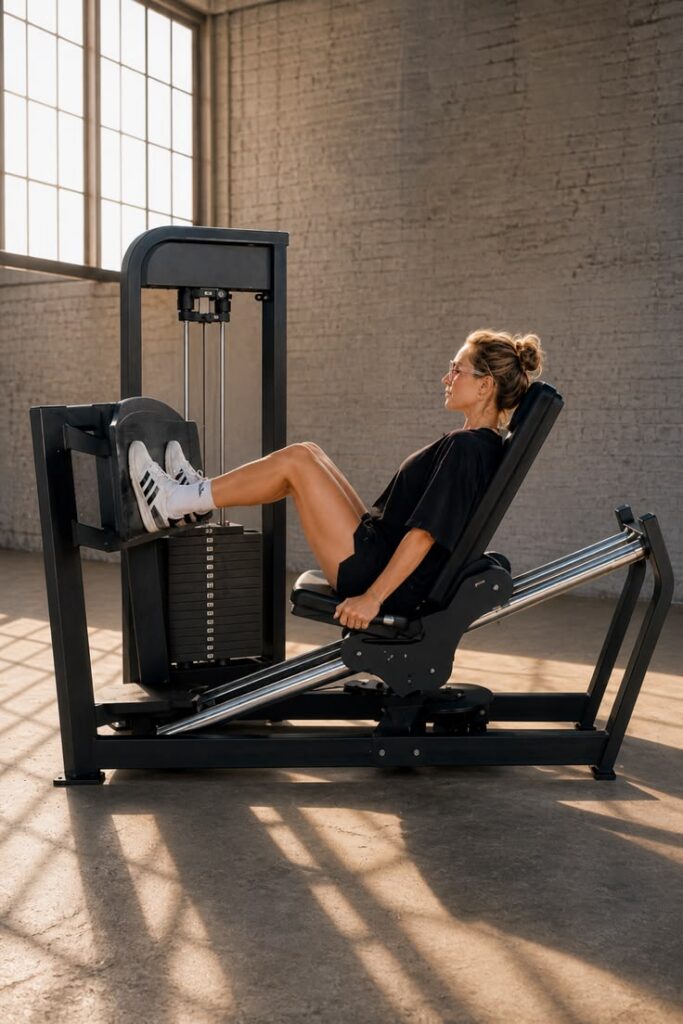
5. Leg Press
The leg press is not a dedicated lower-back machine, but it can train the lower body while requiring you to maintain a stable position against the backrest.
However, technique matters. Avoid allowing your lower back to round excessively at the bottom of the movement, particularly when using heavy resistance.
Best for: Lower-body strength with relatively low direct spinal loading compared with some free-weight exercises.
What Is the Best Machine for Lower Back Training?
For direct lower-back training, a dedicated back-extension or lumbar-extension machine is one of the most obvious choices.
However, the “best” machine depends on your goal. A back-extension machine is useful for isolating the spinal erectors, while a cable machine provides more exercise variety.
Some commercial gyms also have machines from brands such as Techno gym that offer dedicated strength-training stations. If your gym has a Techno gym back extension, check the manufacturer’s instructions and adjust the machine to your body size before adding resistance. Techno gym’s current equipment range includes dedicated strength machines and connected training systems.
What Are the Big 3 Exercises for the Lower Back?
There is no single official “big 3” specifically for the lower back. However, three commonly used strength movements for developing the posterior chain are:
- Deadlift – trains the entire posterior chain.
- Back extension – provides more direct spinal-erector work.
- Romanian deadlift – emphasises the hamstrings, glutes and posterior chain.
These exercises should be performed with appropriate technique and resistance. More weight does not automatically mean a better lower-back workout.
Are 3 Exercises Enough for Back Day?
Yes, three well-chosen exercises can be enough for an effective back workout, particularly when they cover different movement patterns.
For example:
- Lat pull down – vertical pulling
- Seated cable row – horizontal pulling
- Back extension – posterior-chain and lower-back work
You can then adjust sets, repetitions and resistance according to your training level.
What Gym Machine Exercises Are Good for Lower Back Pain?
Exercise can be helpful for some people with lower back pain, but there is no universally appropriate gym machine. NHS guidance recommends staying active and notes that strengthening and exercise can form part of managing low back pain.
However, a machine that feels comfortable for one person may aggravate another person’s symptoms. Therefore, if you have existing pain, consider getting individual advice from a physiotherapist or other qualified healthcare professional.
If an exercise significantly increases your symptoms, stop and seek appropriate advice.
How to Train Your Lower Back Safely
Because the lower back is involved in many compound exercises, it can be easy to overdo direct training.
Keep these principles in mind:
- Start with manageable resistance.
- Prioritise controlled repetitions.
- Avoid using momentum.
- Keep your core braced.
- Increase resistance gradually.
- Allow adequate recovery between sessions.
- Do not train through worsening pain.
NHS guidance also recommends progressive strengthening rather than simply avoiding movement for people with appropriate low-back-pain presentations.
Final Thoughts
A lower back machine gym setup does not have to be complicated. Machine back extensions are one of the most direct options, while cable pull-throughs, cable deadlifts, rows and leg presses can complement your training by developing the wider posterior chain.
For a balanced workout, focus on controlled movement, progressive resistance and good technique rather than simply choosing the heaviest weight.
More Guides on how to use Gym Machines