Foam roller exercises can complement your strength routine by providing a simple way to massage tired muscles.
Whether you lift dumbbells, use resistance machines or train with bodyweight, a roller can fit around your existing sessions.
This guide rounds up five useful movements and explains how to approach them comfortably. You will also find equipment suggestions and a short routine.
The best movement depends on your needs, comfort and ability to support your body. Start gently and choose positions you can control.
What Can Foam Rolling Do?
Foam rolling uses pressure from your bodyweight to massage soft tissue. It may temporarily improve movement range and ease feelings of soreness.
However, it does not replace strength training, sleep or a suitable warm-up. Avoid expecting a roller to repair injuries or guarantee better lifting performance.
Use it as an optional part of your routine. Notice whether you feel more comfortable afterwards, rather than chasing maximum pressure.
Choose Your Equipment
A smooth roller with moderate firmness offers a straightforward starting point. A very firm or heavily textured surface can feel unnecessarily uncomfortable.
Choose a length that supports your intended exercises. Longer rollers provide more room for positioning, while shorter versions take less storage space.
Browse SportoEquip’s recovery equipment to explore its listed foam roller options. Check the current Amazon offer for dimensions and firmness.
An exercise mat can make floor positioning more comfortable. Keep the surrounding area clear and wear clothing that allows easy movement.
You only need one suitable roller to begin. Extra massage accessories can wait until you understand your preferences.
Five Foam Roller Exercises to Try
Calf Roll
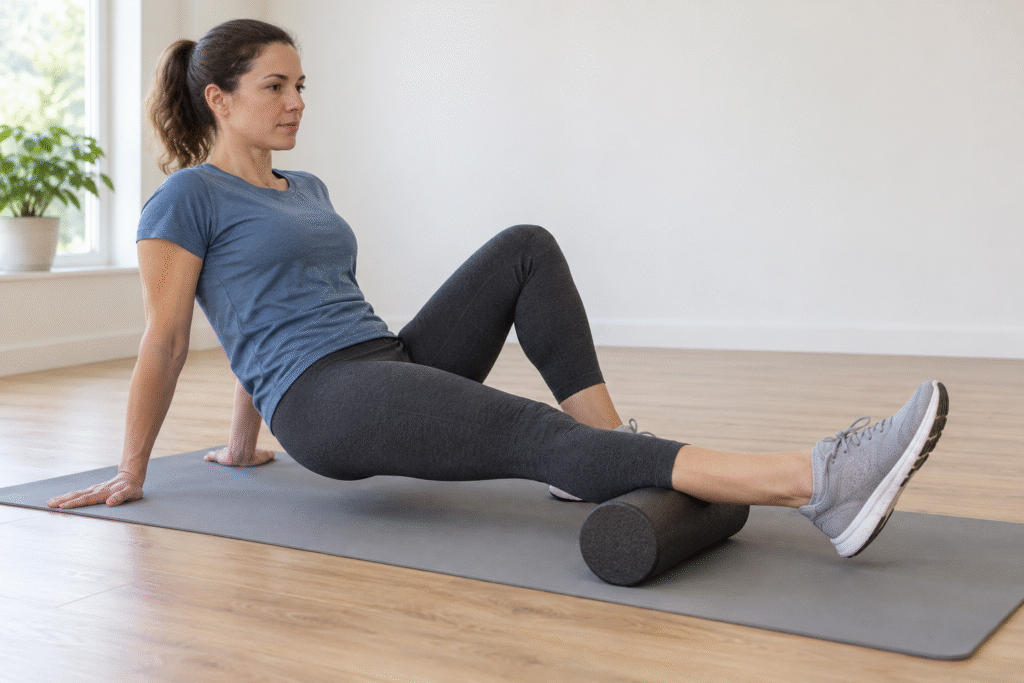
Sit with one leg extended and your other foot resting on the floor. Place the roller beneath your extended calf.
Position your hands behind you for support. Lift your hips slightly if comfortable, then move slowly along the calf muscle.
Keep the roller away from your ankle and the back of your knee. Change legs after a short, comfortable pass.
Use your supporting foot and hands to reduce pressure. You do not need to stack your legs to make this effective.
Quadriceps Roll
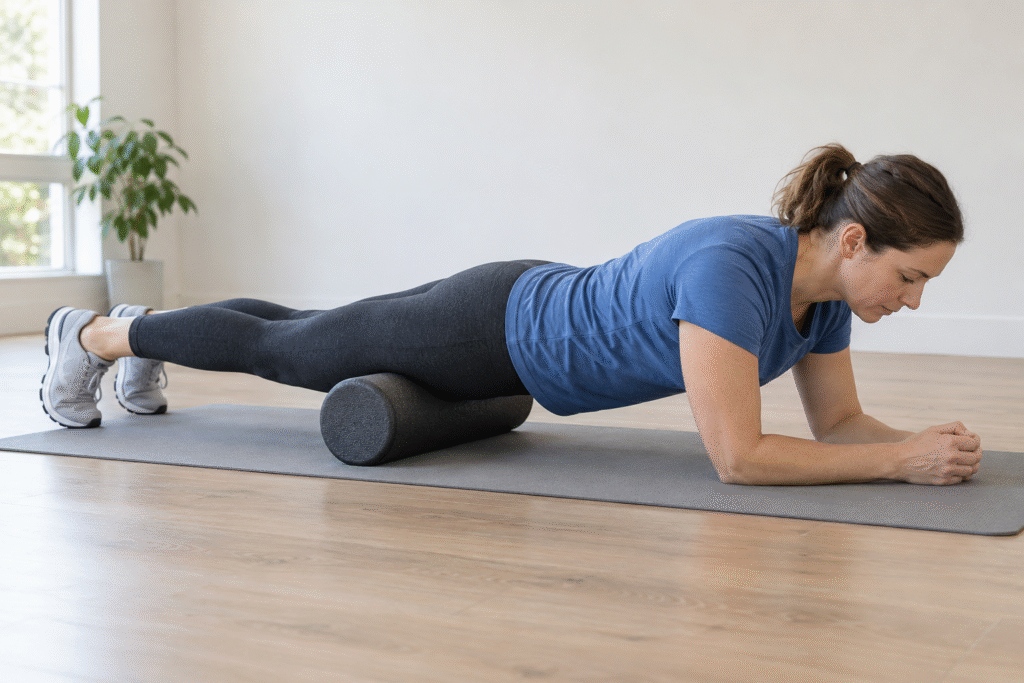
Lie facing down with the roller beneath the front of your thighs. Support yourself through your forearms and keep your trunk controlled.
Move slowly across a small section of muscle. Stay below the pelvic bones and above your kneecaps.
Reduce pressure by shifting more weight through your supporting limbs. Avoid allowing your lower back to sag.
This position requires some upper-body support. Skip it if you cannot maintain a comfortable posture.
Glute Roll
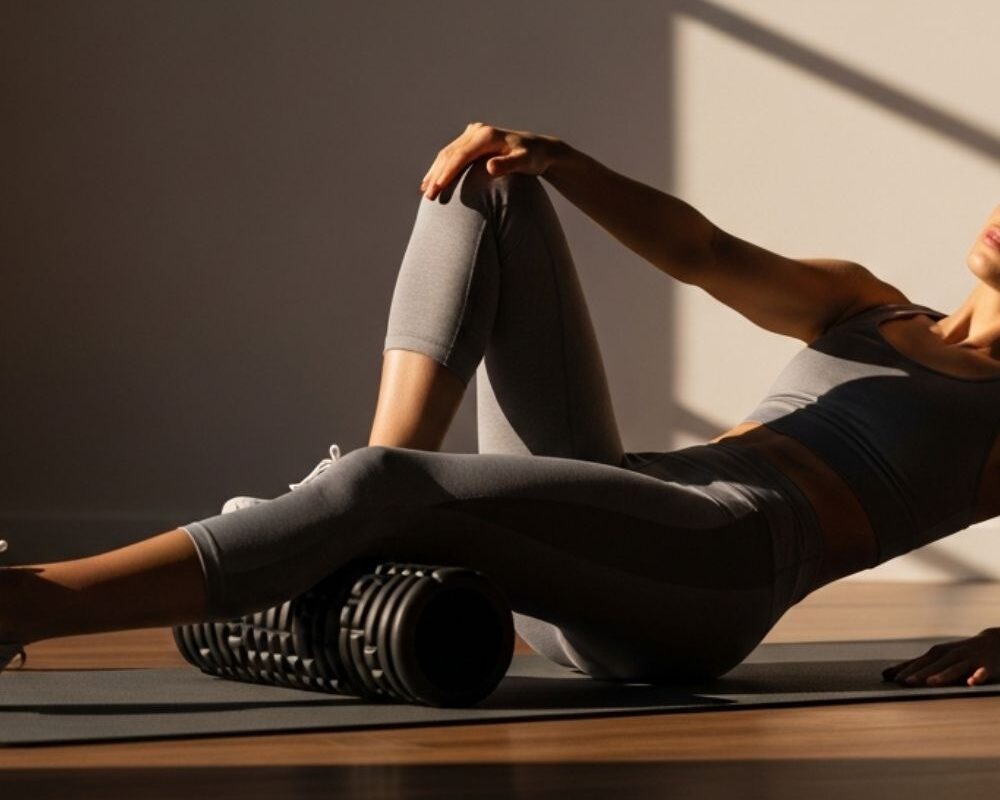
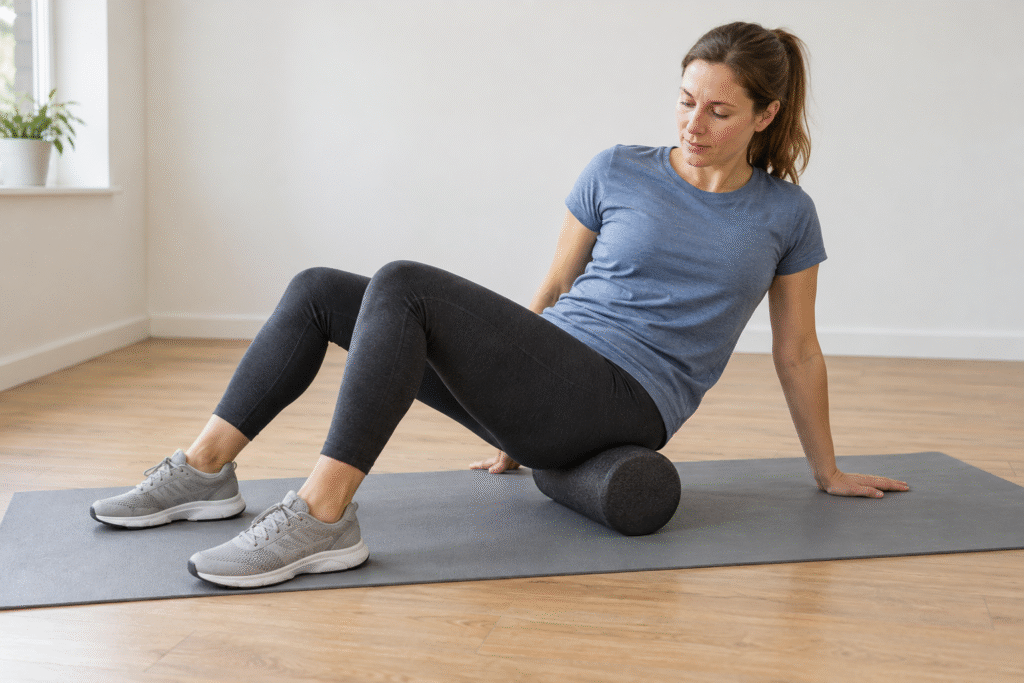
Sit on the roller with your feet grounded and hands supporting you behind. Gently shift towards one buttock.
Use small movements over the muscular area. Avoid rolling directly over your tailbone or other bony points.
Keep both feet down initially. Crossing one leg over the other is optional and unnecessary if it feels uncomfortable.
Change sides and keep your breathing relaxed. Reduce pressure immediately if you notice sharp pain or tingling.
Hamstring Roll
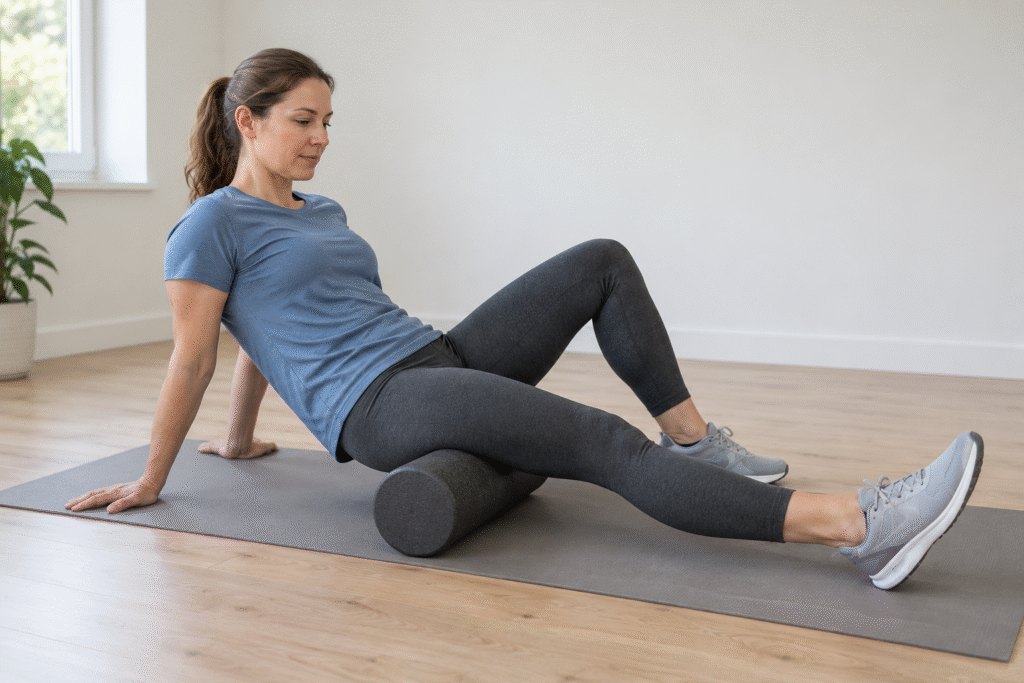
Sit with the roller beneath the muscular back of one thigh. Bend the other leg and use your hands for support.
Move through short passes between your buttock and knee. Avoid pressing directly into the sitting bone or knee joint.
Keep the movement slow enough to control your position. Adjust your supporting foot to limit how much bodyweight reaches the roller.
If lifting your hips strains your wrists, choose another movement. Comfortable positioning matters more than completing every exercise.
Upper-Back Roll
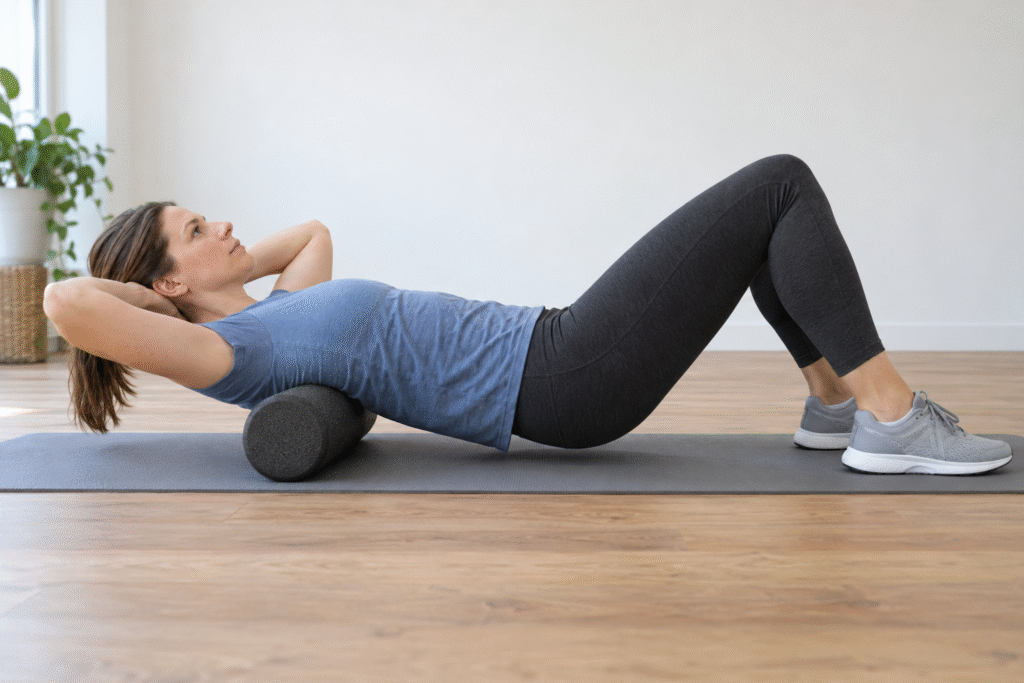
Lie back with the roller across your upper back, below your shoulders. Bend your knees and place your feet flat.
Support your head gently without pulling your neck forwards. Use small movements within the upper-back area.
Keep your neck neutral and avoid rolling onto your lower back. Stop if you cannot control the movement comfortably.
Create a Short Routine
These foam roller exercises work best when you select areas relevant to your session.
Begin with roughly 20–30 seconds per area or side. This is a starting suggestion, rather than a required target.
For a lower-body session, choose calves, quadriceps and glutes. Add hamstrings only if the position feels useful and comfortable.
Before lifting, follow rolling with easy movement and lighter practice sets. After training, keep any rolling gentle.
Avoid Common Mistakes
With foam roller exercises, stronger pressure does not automatically produce better results.
Avoid fast passes, prolonged pressure on one spot and rolling over joints. Never roll directly over an acute injury.
Stop for sharp pain, numbness or tingling. Seek professional guidance for persistent symptoms or conditions affecting circulation or bleeding.
Choose foam roller exercises that leave you comfortable enough to continue your normal routine.
Keep sessions brief, use manageable pressure and build your strength programme around consistent training and recovery.
Looking for additional reading? Check out this blog on the importance of post workout recovery