Workout Machines and Names: Your Complete Guide to Home Gym Equipment
Walk into a gym for the first time and it can feel like you’ve accidentally wandered onto the set of a very sweaty sci-fi film. There are machines everywhere, everyone else appears to know exactly what they’re doing, and you’re left wondering whether that intimidating contraption in the corner trains your legs or launches you into space.
Thankfully, workout machines and names are much easier to understand once you know the basics.
From treadmills and rowing machines to exercise bikes and cross trainers, different machines target different areas of the body and styles of exercise. Better still, you don’t necessarily need a gym membership to use them. There are now plenty of compact home workout machines available on Amazon.
So, whether you’re creating a home gym or simply want to finally learn what everything at the gym is called, here’s your beginner-friendly guide.
1. Treadmill
Let’s begin with one you’ll definitely recognise.
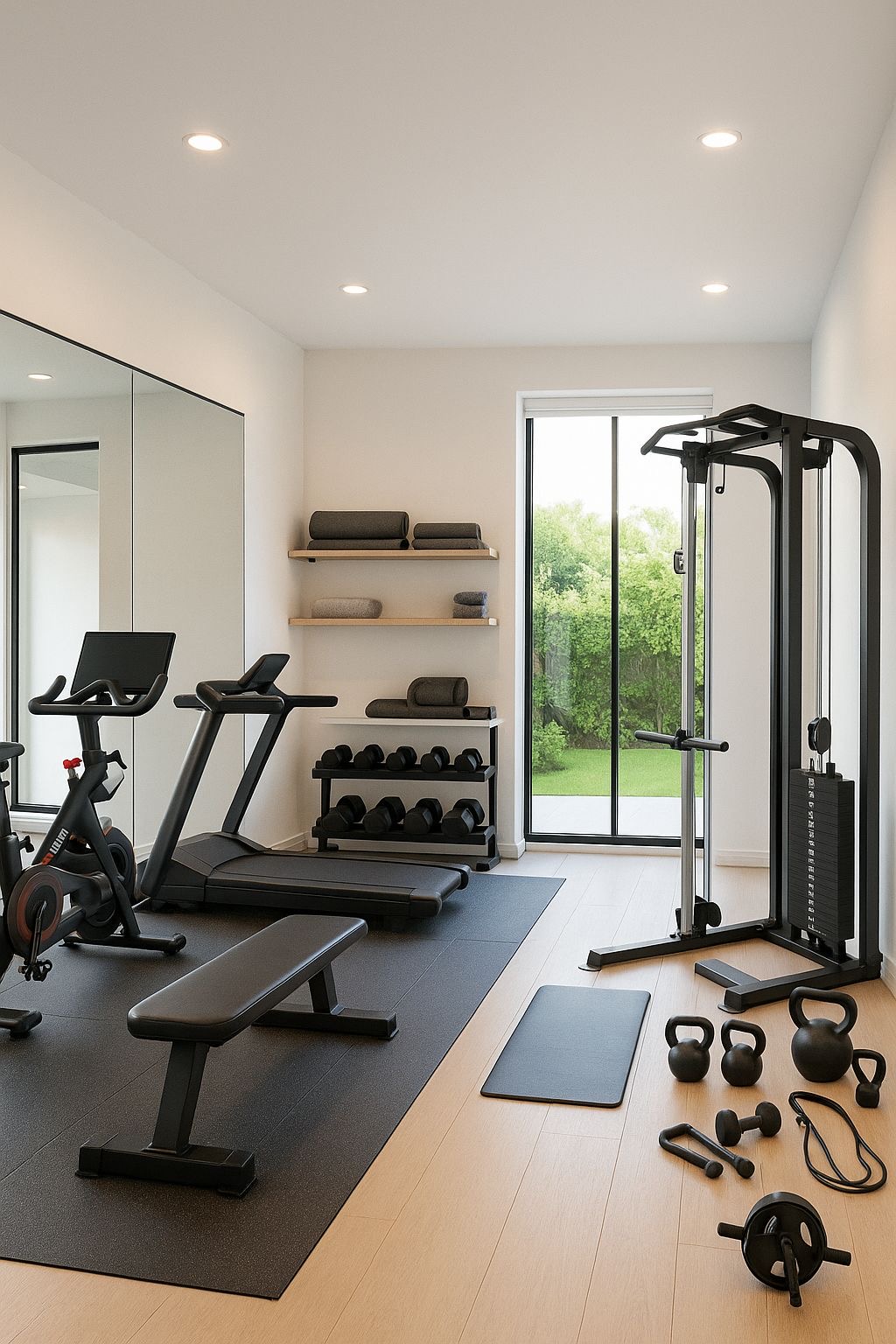
A treadmill allows you to walk, jog or run indoors using a moving belt. Depending on the machine, you can usually adjust the speed and sometimes the incline to make your workout easier or harder.
Treadmills are particularly useful for cardio workouts and anyone who enjoys walking or running but doesn’t particularly enjoy horizontal rain at 7am.
Home versions have become much more compact too, with foldable models making them easier to accommodate if you don’t have a dedicated gym room.
Best for: Walking, running and cardio workouts
Shop: Here
2. Exercise Bike
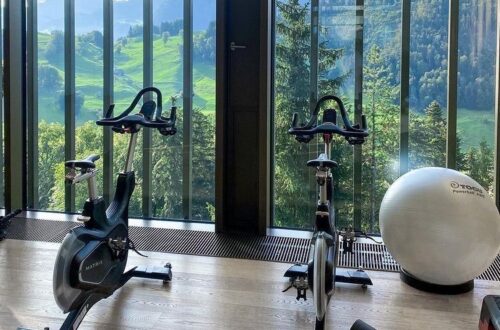
The exercise bike, also called a stationary bike, gives you a cycling workout without actually going anywhere.
Which, admittedly, doesn’t sound very exciting when you put it like that but it’s incredibly convenient.
You sit on the bike and pedal against adjustable resistance, allowing you to make your workout progressively more challenging. Spin-style bikes are particularly popular for faster, more intense indoor cycling sessions.
They’re also handy if you want to exercise while watching TV. One minute you’re starting episode one; the next you’ve cycled the imaginary distance to France.
Best for: Indoor cycling and cardio
Shop: Here
3. Rowing Machine
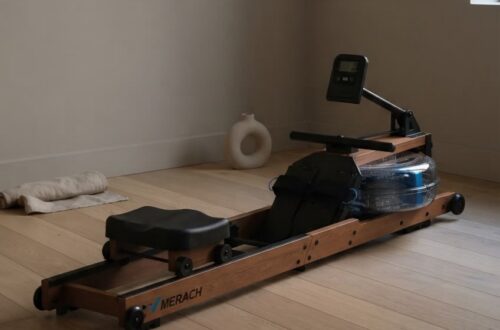
The rowing machine sometimes called an indoor rower recreates the movement of rowing on water.
You push through your legs while pulling the handle towards your body, creating an exercise that involves multiple muscle groups rather than simply relying on your arms.
Rowers are a popular choice for home gyms because they combine cardio with resistance in one machine. Some can also be stored upright when they’re not being used, which is particularly helpful if your “home gym” is also your bedroom, office and occasional laundry-storage facility.
Best for: Full-body workouts and cardio
Shop: Here
4. Cross Trainer
The cross trainer, also known as an elliptical machine, involves placing your feet onto two large pedals and moving them in an elliptical motion.
Most models also have moving handles, allowing your upper and lower body to work simultaneously.
Because your feet remain on the pedals rather than repeatedly striking the ground, elliptical training is generally considered a lower-impact cardio option than running.
It’s also one of those machines that somehow makes you look like you’re enthusiastically skiing despite being nowhere near snow.
Best for: Low-impact cardio and full-body movement
Shop: Here
5. Stepper Machine
If climbing a flight of stairs leaves you questioning every life decision you’ve ever made, meet the stepper machine.
Steppers recreate a stepping or stair-climbing motion and come in several designs. Large stair climbers are common in commercial gyms, while compact mini steppers are much more practical for home workouts.
Some home models also come with resistance bands, allowing you to incorporate upper-body movements while stepping.
They’re particularly appealing when space is limited because a mini stepper can be considerably smaller than a treadmill, bike or rowing machine.
Best for: Compact cardio workouts
Shop: Here
6. Vibration Plate
The vibration plate is probably one of the more unusual workout machines and names you’ll encounter.
You stand or perform exercises on a platform that vibrates at different settings. Rather than treating it as a magical machine that does all the work for you, it’s better thought of as equipment that can be incorporated into certain exercise routines.
For example, people may perform squats or other exercises while using the platform.
And yes, standing on one for the first time does feel slightly like you’ve accidentally switched yourself to spin cycle.
Best for: Adding variety to home workouts
Shop: Here
7. Leg Press Machine
Now we’re moving into the strength-training section of our workout machines and names guide.
A leg press machine lets you push resistance away from your body using your legs. It’s designed primarily for lower-body strength training and is a common sight in commercial gyms.
Unlike our previous machines, a full-sized leg press is usually quite large, so it’s less practical for the average home gym unless you have plenty of dedicated space.
Best for: Lower-body strength training
8. Lat Pulldown Machine
The lat pulldown machine has a long bar positioned overhead that you pull down towards your upper chest against resistance.
It’s primarily associated with training the back, particularly the latissimus dorsi muscles hence the name “lat” pulldown.
It’s another machine you’re more likely to encounter in a commercial gym than squeeze between the sofa and dining table.
Best for: Back and upper-body training
9. Cable Machine
A cable machine uses adjustable pulleys attached to weighted resistance.
What makes cable machines particularly useful is their versatility. Depending on the attachments and pulley position, you can perform numerous upper- and lower-body exercises.
You’ll often see larger dual-cable versions in gyms, while more compact cable systems are available for home gyms.
Best for: Versatile resistance training
Shop: Here
10. Smith Machine
Finally, there’s the Smith machine.
At first glance, it looks similar to a barbell rack, but the bar travels along fixed rails. It can be used for exercises such as squats and presses, although beginners should still learn appropriate technique and setup before using one.
A Smith machine is usually more appropriate for a dedicated home gym than a corner of the living room unless you’ve decided the sofa was taking up unnecessary workout space anyway.
Best for: Strength training with a guided bar path
Which Workout Machine Is Best for Home?
The answer depends on what you actually enjoy doing.
For walking and running, consider a treadmill. If cycling is more your thing, an exercise bike makes sense, while a rowing machine offers a full-body cardio option. A cross trainer is worth considering if you prefer lower-impact cardio, and a mini stepper is brilliant when space and budget are limited.
The most important thing is choosing equipment you’re realistically going to use. The fanciest treadmill in the world isn’t particularly useful when its main role becomes holding three coats and a handbag.
Hopefully, this guide to workout machines and names makes navigating the gym or building your own at home considerably less confusing.
And next time someone casually mentions the elliptical, lat pulldown or rower? You can nod confidently rather than quietly Googling it under the bench.
Check out of product section here to see other gym related products!